- Direct from the grower
- Freshly shipped
- Quick delivery & pick-up point
- Spicy support


Eritrea is a country in East Africa, located on the Red Sea in the northeast of the continent. Eritrean cuisine is diverse and rich in flavor and tradition. The Eritrean food culture really values shared meals. It's common to eat with your hands, using pieces of injera to pick up and dip your food.
Eritrean cuisine has been influenced by various cultures, including Ethiopian, Arab, and Italian. This is due to its location and because it was an Italian colony until the end of World War II. After that, it became a British protectorate, and between 1952 and 1962, it formed a federation with Ethiopia. In 1962, the country was unwillingly annexed as a province of Ethiopia, which led to years of struggle and war. In 1991, Eritrea became an independent country.
Despite its complex history and challenges, Eritrea boasts a rich culture, diverse cuisine, and unique heritage that's definitely worth exploring and understanding.
The cuisine is known for using olive oil, spices, vegetables, and legumes. Plus, there are 2 special essential ingredients.
Berbere
Berbere is a super spicy spice mix or paste that's the foundation of Eritrean cuisine. It's made from various freshly ground and roasted spices, including red pepper, paprika, garlic, ginger, cumin, coriander, fenugreek, cinnamon, and lots more! The exact blend can change from recipe to recipe and region to region, but you'll always get a complex and spicy flavor. You can prepare Berbere as a dry mix or as a paste with oil or water and onions. It's even called the 'queen of spices'.
Berbere is often used to flavor stews. You can also use it to season grilled meats, veggies, sauces, and soups. It doesn't just give dishes a spicy kick, but also a deep, rich flavor with layers of spice and warmth.
Mitmita is another widely used spice mix; it's usually spicier and often used when preparing meat dishes.
Tesmi
Tesmi is clarified butter with added onions, garlic, and spices like ginger and turmeric. Clarified butter is pure butterfat, which you get by cooking out all the milk proteins and water from the butter. The garlic, ginger, and onion are finely chopped and added to the butter along with all the herbs and spices. This is how it gets its rich flavor. After 20-30 minutes of cooking, it stops foaming, and the butter floating on top becomes clear. It's important not to stir, as the clarified butter is strained from the pan. Let it cool, and you've got Tesmi.
Tesmi is often used to flavor various dishes, including stews, grilled meats, veggies, and soups. It adds an intense garlic and ginger flavor to meals and can vary in spiciness depending on how much of the ingredients are used.


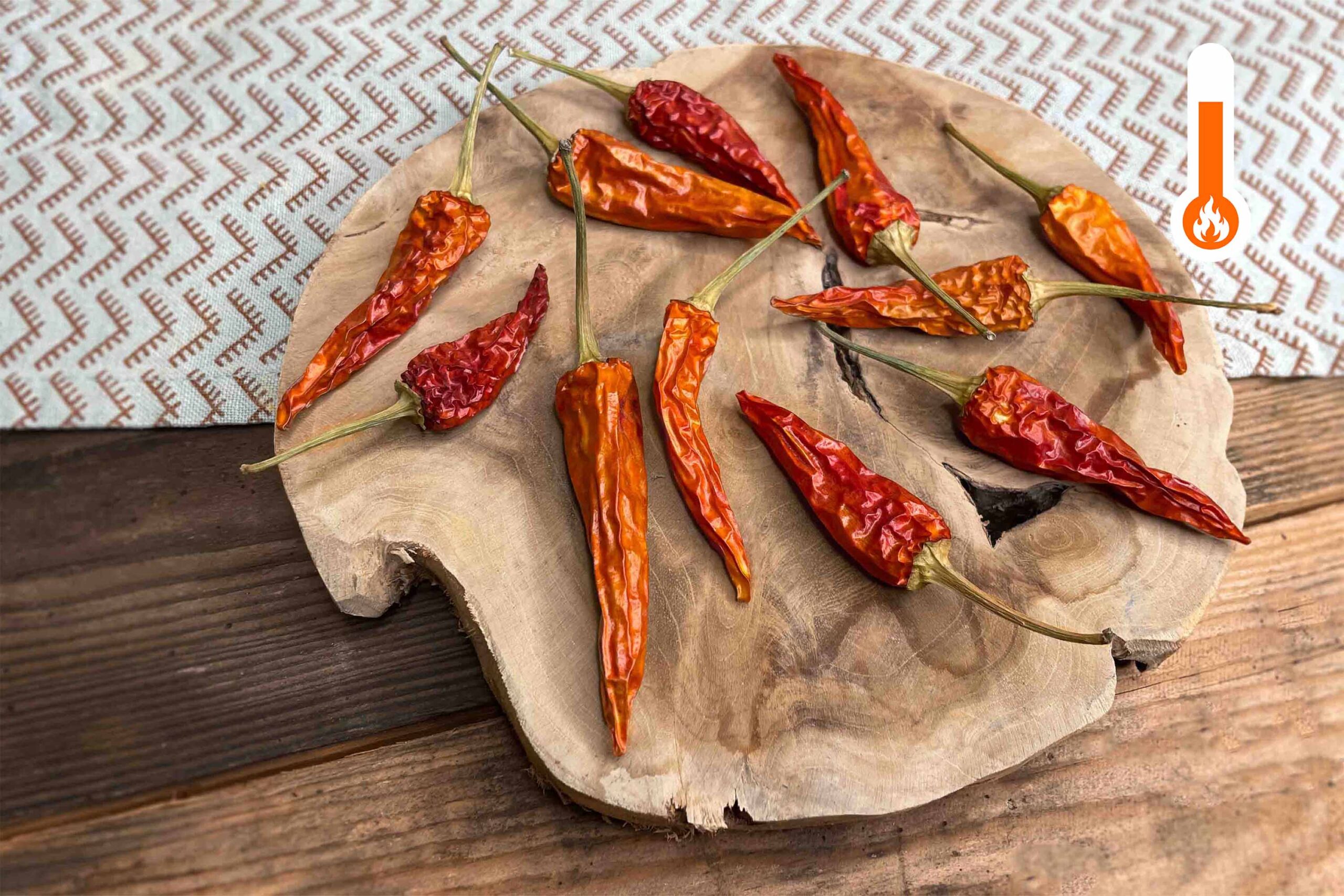
Fresh and dried peppers are often used to add flavor and as a garnish in Eritrean dishes. You can toss them into salads, sauces, and side dishes for an extra kick of flavor and heat. They play a big part in creating those unique Eritrean flavors. The type of pepper you choose depends on how much heat you want and the specific flavor you're aiming for in your dish. Some of the most commonly used peppers include:
Red Peppers
Red peppers are often dried and ground into a powder to create berbere, a super important ingredient in Eritrean stews and sauces. When fresh, they're awesome as a seasoning and garnish. They don't just bring that characteristic heat to dishes, but also seriously boost the depth of flavor and aroma.
Bird’s Eye Chili / Rawit
Bird's eye chili, also known as 'azebo gomena' in Eritrea, are small, super-hot peppers used to give dishes an extra kick! You can sometimes add them whole to stews or grind them up into a spicy sauce.
Jalapeño & Green Peppers
Jalapeños and green peppers are also popular in Eritrean cooking, usually fresh to add a nice mild kick to dishes. They're often used as a garnish and can be tossed into salads, stews, and all sorts of other yummy meals.
In Eritrea, people don't eat from individual plates but share from one large dish. The table isn't set with knives, forks, or spoons; instead, they eat with their hands. Many dishes are served with injera, a bread that looks like a pancake with a spongy texture and a slightly sour taste. Pieces of injera are used like cutlery to pick up and dip food.


Stews, known as wats or tsebhi, play a central role in Eritrean cuisine. ‘Wat‘ is the general term referring to different kinds of Eritrean stews. They can include meat, vegetables, or lentils simmered in a sauce made with herbs, onion, tomato, berbere, and other spices. There are also many vegetarian dishes prepared with veggies and potatoes; or with ingredients like cabbage, pumpkin (dubba), or okra (bamja).
Popular wats include Doro Wat (spicy chicken stew with eggs), Misir Wat (vegetarian stew made from red lentils), and Atkilt Wat (mixed vegetable stew).
Tsebhi is a more specific type of Eritrean stew and usually refers to meat dishes. Tsebhi is traditionally prepared by simmering meat in a sauce based on specific herbs and spices. It can be made with beef, chicken, lamb, or even fish. Tsebhi often has a rich flavor from slow simmering and the use of spices like cumin, cardamom, garlic, and onion.
Popular tsebhi include Doro Tsebhi (chicken stew) and Zigni Tsebhi (spicy beef stew with berbere). These are usually served on special occasions, like feasts or festivals, and are dishes known for their rich taste and aroma.
Suwa is a traditional local beer that's super popular in Eritrea. It's usually brewed from barley, sometimes with corn too. Suwa has a slight sourness and is often made right at home. It's a social drink, perfect for special occasions and get-togethers.
Tej is often linked to Ethiopian culture, but you'll find it in Eritrea too. It's a traditional honey wine that can be sweet or spicy, depending on how it's made and what spices are added. It's a popular pick for celebrations and parties!
Coffee holds a super special spot in Eritrean culture. The coffee ceremony is a big social ritual where fresh coffee beans are roasted, ground, and brewed for guests. This ceremony brings everyone together and is a symbol of hospitality and community.


These two countries have a long history of political and cultural differences. While both cuisines have their unique aspects, they also share a lot of common dishes, elements, and flavors.




Linda Roodenburg
– A chapter featuring Eritrean recipes.

Yohanis Gebreyesus
– Featuring recipes for Injera and various stews.
English

Almere

The Hague & Leiden

The Hague

Rotterdam

Eindhoven

Antwerp

AE LEARNING
Youtube

AE LEARNING
Youtube
| Monday | 8:00 AM - 5:00 PM |
|---|---|
| Tuesday | 8:00 AM - 5:00 PM |
| Wednesday | 8:00 AM - 5:00 PM |
| Thursday | 8:00 AM - 5:00 PM |
| Friday | 8:00 AM - 5:00 PM |
| Saturday | from 8:00 to 12:00 |
| Sunday | Closed |
Burg. Crezeelaan 44A
2678 KZ De Lier
© Westlandpeppers | Webshop by Buro Staal
Due to the holiday, our online store will be closed on Friday. Orders placed after 9:30 a.m. on Thursday, July 23, will not be processed and shipped until Monday, July 27. Pickup on Friday and Saturday will also not be available. Please keep this in mind and place your order in time. Thank you for your understanding, and have a great summer!
Our webshop will be closed this coming Friday. Orders placed after 9:30 AM on Thursday, July 31st, will be processed and shipped again on Monday. Thanks for your understanding!